
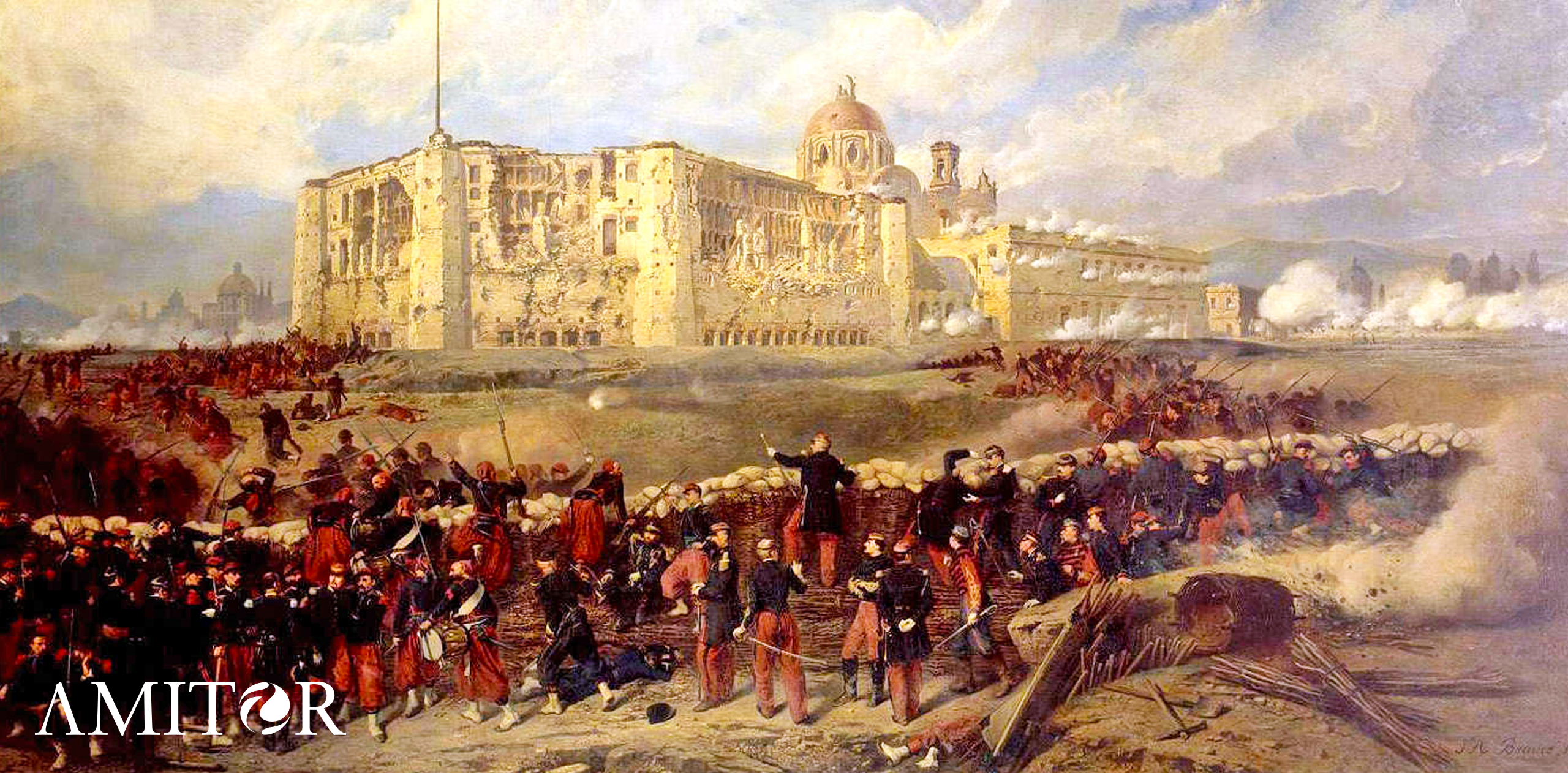
All history is written from one perspective or another with the victor usually writing the narrative. In the case of The Battle of Puebla, readers must deal with inherent defeatism in the Mexican psyche, where history is propagandized for political purposes, and with marketing schemes appropriating history for commercialism. Somewhere in between there is the truth — lost in myth and wrapped in the propaganda of a marketing scheme. Most readers likely know about the Battle of Puebla as they celebrate Cinco de Mayo, but what many don’t know is the history around it.
It is important to start by clearing up the biggest misconception about Cinco de Mayo — it is not Mexican Independence Day. México’s Independence Day was on September 16, 1810. That was the day that Miguel Hidalgo y Costilla launched the war that led to México’s independence over ten years later.
The Battle of Puebla was fifty years after the War of Independence. The day-long battle on May 5, 1862, ended with General Ignacio Zaragosa successfully defending Puebla from the French invaders. It was fought against a French invading army that was looking to impose a Mexican monarchy under Napoleon III.
The history of the Battle of Puebla, like most Mexican history, involves a complex set of dynamics over decades of internal discord. The Mexican War for Independence lasted almost eleven years, from 1810 until 1821. Immediately after it ended, a Constitutional Monarchy (Imperio Mexicano) was established under the direct control of the Catholic Church. Between 1821 and 1833, various battles occurred between various political ideological groups competing for control of the country. The main competing ideologies included federalists, centrists, conservatives, liberals and the republicans. (see below for a complete chronology of Mexican wars)
The fighting largely ended in 1833, but the ideological differences were largely unsettled leading to sporadic fighting for some time. Fighting resumed in 1835 when Texas rebelled against México over the prohibition of slavery in Mexican territories.
Three years later, another war erupted in México when the French invaded the country in 1838. The Guerra de los Pasteles, or the Pastry War, ended a year later. This was first French intervention of México. As is common in México’s colorful, though often lacking in historical records, the Pastry War began after a French baker demanded to be paid for damages caused to his business by Santa Anna’s troops. History only knows the last name of the baker — Remontel.
The reason behind the lack of the historical record for him is likely due to Remontel being a representation of the absurdity of the first French intervention of México over a debt owed to the French by the Mexican government. The destruction of a pastry shop as the reason for the war obscured the fact that Mexicans had been fighting for almost 17 years and were ill-prepared for another war. Lurking in the background were European countries, mainly France, seeking to reassert themselves in the Americas.
Following the first French invasion, between 1846 and 1854, the United States intervened twice in México. The result of the first intervention, in 1846, was the loss of about half of México’s national territory, leading to the psyche of defeatism driving México’s internal narratives to this day. In 1854, William Walker invaded México attempting to establish a colony in Sonora.
Meanwhile, the Catholic Church consistently intervened in Mexican affairs through political backchannel intrigues. In 1847, in what is today known as the Rebelión de los Polkos, a group organized under the influence of James K. Polk. The Polkos — rebels supporting the Catholic Church — fought to defend the expropriation of Church property. Also the indigenous Mayans also rebelled for indigenous rights in southern México, pressuring the war-leery country to fight again.
As if the two hostilities were not enough, two more battles were fought against the United States by Mexican irregulars in 1859 and 1861 near Brownsville Texas. Another conflict broke out in 1857, as war raged across México on various fronts between the conservatives and the liberals.
Benito Pablo Juárez García, better known as Benito Juárez was one of the leaders of the liberals fighting the conservatives. Juárez, as Minister of Justice, drafted the Juárez Law which proclaimed all citizens equal and limited the authority of the Catholic Church and the army in political affairs. The Catholic Church opposed the Juárez measures limiting Church political power in México.
In 1857, a liberal Constitution was adopted. Félix María Zuloaga, with the support of the Catholic Church, launched a rebellion to restore Church authority in Mexican political affairs.
The War of Reform raged as the country was divided into two political ideologies, the conservatives versus the liberals. The conservatives were led by Félix María Zuloaga while the liberals were led by Benito Juárez. Zuloaga controlled Mexico City while Juárez established himself in Veracruz, a very important commerce port in México at the time. The port was the lifeline for European commerce throughout México.
In 1859, the United States government, through Robert McLane signed a diplomatic accord whereby Juárez began to receive aid overcoming the conservatives’ military advantage. On January 1, 1861, Benito Juárez recaptured Mexico City and assumed the presidency.
The defeated conservatives continued to stage guerilla attacks against the Benito Juárez administration for years. México’s infrastructure and economy had been damaged through years of conflict. The Catholic Church continued to attempt to reassert its political power in the country while European saw an opportunity in the weakened Mexican state to reassert their influence in the Americas.
With Benito Juárez now in control of México, it was now illegal for the Catholic Church to own property and Juárez limited Church tithes and fees the Church demanded from Mexicans. Up until Benito Juárez took power, the Catholic Church was the largest landowner in México. It owned almost one-third of the private land in México. The Mexican government attempted to pay for the Catholic Church land that it expropriated through the Ley Lerdo, but the Catholic leaders refused to accept the payments and instead continued to fund the rebellion against the Mexican government.
Starting in 1861, a movement to convince Europe that the Mexican people wanted a European monarchy placed on them was started by political factions within México. Their attempt was opposed by the indigenous president — Juárez and his liberal government who wanted a México independent of the Church or of European influence. Austrian Archduke Ferdinand Maximilian was chosen as the monarch for México. Maximilian was the natural choice for a Latin American monarchy because of his affinity towards the region. However, Austria did not have the naval resources in place to establish a monarchy in México. It needed France and England, the two greatest maritime superpowers of the time to support it.
Meanwhile, the United States divided into two countries because of the American Civil War, which provided the opportunity for the Europeans to establish a foothold in the Americas through an Austrian monarchy in México. The United States was unable to oppose European intervention. The Americas was now open to the European interlopers.
México’s foreign relations, at this time, was European-centric and the country depended on European commerce.
In the attempt to rebuild México after the many years of wars that it had endured, Benito Juárez informed the European countries that it was suspending debt payments for two years. Britain and France received notification of the suspension of the debt payments on July 17, 1861. Meanwhile, the Catholic Church continued to fund opposition to the Juárez administration.
Before Félix María Zuloaga was defeated by the liberals, he had implored Napoleon III to intervene to restore order in México, under his authority. At the time, Napoleon III was too distracted by European issues and thus ignored the request from Zuloaga.
In response to the suspension of the debt payments, England and France mobilized their naval forces to occupy the Port of Veracruz, through which most of the revenues from foreign trade entered the country. Foreign commerce the Juárez government needed to rebuild the country. Spain, who had naval forces in Cuba, also mobilized them. Spain still wanted to reclaim México fits itself. México was now facing three European powers and the Catholic Church alone.
On October 31, 1861, the Convention of London was signed by England, France and Spain. All three countries agreed to mount military operations against México to recover the debt payments. A clause in the convention specifically prohibited the three countries from acquiring any land and resources or from interfering in the internal Mexican affairs. They were only authorized by the convention to recover the debt owed to them.
Spain immediately set sail from Cuba landing 6,000 troops in Veracruz.
In January of 1862, the French followed, landing troops in Veracruz. The English soon followed, landing another 200 marines.
For the English, the French and the Spaniards, Veracruz miserable for them. Juárez had decreed that any help proffered to the invaders would result in an immediate death sentence for treason. The largest danger to the invading armies, though, was the Yellow Fever, or vomito negro, which caused many casualties among the Spaniards and the French troops.
England was only intent in collecting its debt, while Spain was hoping to recover its lost Mexican lands. Napoleon III, by this time, had been convinced that he could establish a foothold in the Americas by imposing Archduke Ferdinand Maximillian as the new emperor of México. These opposing interests created discord among the invading allies, leading to distrust among them with each distrusting the others.
Benito Juárez, using the animosity among them and the threat of Yellow Fever on the invading troops and began negotiating with the invaders. The Spaniards, who soon realized that the Spanish were too hated by the Mexicans to have any hope of reconquering its lost territories, sided with the English, and agreed to end hostilities when an agreement on the debt was reached.
Juárez negotiated a settlement. First by quartering the invading troops in Orizaba, while negotiations between the various governments were undertaken, to protect the troops from the Yellow Fever threat. The three invading armies were quartered under the flags of the four nations, including México’s flag, thus tacitly accepting the Convention of London and the government of Benito Juárez. The troop quartering agreement was signed on February 9, 1862, in La Soledad. It signaled the beginning of the negotiations between the four countries. The governments of England and Spain signed the agreement, but the French refused.
On April 9, 1862, the English and the Spaniards openly accused the French of breaking the Convention of London. The French had brought Juan Almonte, a former leader of the conservatives and a former Mexican soldier, who had come along with the French as Napoleon’s emissary to establish the monarchy in México. Almonte had arrived along with another 2,000 French soldiers under the command of General Charles Ferdinand Latrille Comte de Lorencez in March. The arrival of Almonte erased any pretense that the French would honor the agreement of nonintervention in México.
Lorencez was a relative of Empress Charlotte of Belgium also known as Carlota, who was married to Maximilian. It was Carlota who was the driving force behind Maximilian to become emperor of México.
Meanwhile, Lorencez considered the Mexicans inferior to the French.
After reaching a settlement with México, the English departed México on April 10, 1862. By the middle of April, the Spaniards had also departed as well. At the end of April, Lorencez, with 6,000 French troops began to march on Mexico City to impose the monarchy on the country under Ferdinand Maximilian. About 1,000 French troops had already succumbed to Yellow Fever but 6,000 troops remained to fight. Lorencez believed he would be in Mexico City by May 25, according to a dispatch he sent Napoleon III before departing. Lorencez had been under the illusion, perpetuated by the Church and Carlota that the Mexicans were ready for a monarchy and thus expected be welcomed in Puebla. He also seriously underestimated the Mexicans refusing to believe that they were equal to the French.
Instead of open arms and flowers, the French army was met by 4,000 Mexican soldiers armed with obsolete, almost 50-year-old weapons left over from the Battle of Waterloo. The English had previously sold the weapons to the Mexicans. The Mexicans were a ragtag army hastily assembled to defend Puebla from the French. But behind them lay the experience of years of war the Mexican state had endured to this point.
The Mexicans were led by General Ignacio Zaragoza, a veteran of the conservative-liberal wars. Zaragoza was born in present day Goliad, Texas, when it was still Mexican territory and thus was a Texan, giving the future Cinco de Mayo holiday in the United States a Texan nexus. The Mexican defenders were mostly a militia drafted into service with only three months of training.
Opposing them was a French army made up of Zouavez, Algerian regiments drafted into French service in 1830. The Zouavez were renowned as an elite French armed force having fought in many French military expeditions. By 1853, there were three Zouavez regiments.
On May 5, 1862, Lorencez attacked Puebla. He was forced to retreat by the Mexican forces under Zaragoza. The Mexican forces continued to repel various French attacks throughout the day. After Lorencez was unable to take Puebla in his initial attacks, he regrouped his forces and shifted his attacks to the south. A Oaxacan infantry and the Rifleros de San Luis battalion stopped his advances on the south. The Brigada Porfirio Díaz then pursued the French when they tried to retreat from the field of battle. General Zaragoza, knowing that his forces were outgunned and out manned, ordered the pursuit by Porfirio Díaz, to be broken off.
By the end of the day, according to official Mexican Army reports, the French had 476 casualties. Mexican forces had suffered 83 casualties killed, 102 wounded and 12 missing in action.
Lorencez, humiliated, was forced to retreat and summoned more forces to continue his advance upon Mexico City. On November 10, 1862, Lorencez was forced to relinquish his command to General Élie Frédéric Forey, who had arrived with French reinforcements to continue the march upon Mexico City.
The Battle of Puebla was not the decisive victory that the Cinco de Mayo celebrations in the United States mistakenly portray it to be. Rather, the Battle of Puebla was a much-needed affirmation of the Mexican psyche that pushed away, for a time, the feeling of defeatism that had overtaken Mexicans over the numerous years of wars and losses of national territory. The Batalla de Puebla was a psychological win for the Mexicans and a defeat for the French.
The French went on to impose the Second Mexican Empire (Segundo Imperio Mexicano) under Maximiliano I. It was the second monarchy to govern México. The Catholic Church and the conservatives were now back in power in México. Benito Juárez was forced to retreat his government to present day Cd. Juárez, then known as El Paso del Norte. The City of Juárez was ultimately renamed in honor of Benito Juárez in 1888.
In 1865, the American Civil War ended allowing the U.S. government to start imposing pressure on France through the Monroe Doctrine to leave México. In 1866, Napoleon III withdrew his French troops leaving Maximiliano I without the French military to support his monarchy. Napoleon III had stretched his military forces too thin, and he needed to bring back his 40,000 French troops deployed in México to help guard the Pope from the Italians and reinforce his units in Algeria.
On June 19, 1867, Maximiliano I and two of his generals are executed by firing squad, effectively ending the French monarchy in México and restoring Benito Juárez as the legitimate president of México.
The Battle of Puebla proved that Mexicans could overcome their sense of defeatism and thus a slow reawakening began. For Mexicans, the Battle of Puebla is a civic holiday about a historical event that gave Mexicans a sense of accomplishment.
Conflictos, Guerras y Rebeliones Mexicanas [Mexican Wars]
1500
1519-1521: La Conquista: Invasión de Hernán Cortez [Spanish invasion of the Aztec Empire] 1527-1687: La Conquista Española: Conquista misional y militar de los indígenas. [Spanish occupation and church indoctrination of the indigenous population]
1800
1810-1821: Guerra de Independencia [Mexican War of Independence] 1821: Expedición del General Long: James Long intento anexar Texas a los Estado Unidos sin éxito. [US General James Long attempts to annex Texas to the United State without success]
1821-1823: Imperio Mexicano: Monarquía Constitucional Católica. Luchas internas entre federalistas, centralistas, conservadores, liberales, republicanos e imperialistas. [Catholic Constitutional Monarchy, internal battles between federalists, centrists, conservatives, liberals, republicans and imperialists]
Acciones importantes: [Important battles]
1822: Rebelión de Felipe de la Garza: Republicanos contra el Imperio Mexicano. [Republicans against the imperialists]
1822-1823: Revolución del Plan de Casa Mata: Republicanos contra el Imperio Mexicano. [Republicans against the imperialists]
1823: Rebelión de Oaxaca, Rebelión de Guadalajara y Rebelión de Tierra Caliente: Oaxaca y Jalisco se levanta contra el gobierno provisional. [Oaxaca & Jalisco rebels against the provisional government]
1823: Rebelión de Puebla: Puebla se declara Estado Soberano después de la caída del Primer Imperio Mexicano. [Puebla declares itself a sovereign state after the fall of the Mexican monarchy]
1823: Insurrección en Puebla y Revuelta de Querétaro: Levantamiento imperialista. [Imperialists fight the provisional government]
1823: Rebelión Iturbista de Texas: Independentistas contra el gobierno provisional. [Independents fight the provisional government]
1823: Rebelión de Márquez: Federalistas se oponen al gobierno provisional. [Federals fight the provisional government]
1823: Revolución de San Miguel El Grande: Imperialistas contra el gobierno provisional incluyendo al francés Octavien D’Alvimar, pariente de Napoleón. D’Alvimar había mantenido dialogo con Miguel Hidalgo buscando apoyar a México contra los Españoles durante la Guerra de Independencia. [Imperialists fight the provisional government with the help of the French man; Octavien D’Alvimar who is related to Napoleon had built a relationship with Miguel Hidalgo while looking to help Mexico in its quest of Independence from Spain]
1821-1825: Intentos de Reconquista Española en México: Defensa del mar territorial. [Spanish attempts to retake Mexico. Mostly territorial waters defense] Ojo: España no reconoció formalmente la independencia de México hasta diciembre de 1823. [Note: Spain did not officially recognize Mexican Independence until December of 1823]
1823: Expedición de Santa Anna a San Luis Potosí: Santa Anna se levanta para tomar mando del pueblo Mexicano [Santa Anna attempts to install himself as leader of Mexico]
1824: Levantamiento Iturbidista de Tepic: Intento de restaurar el Imperio Mexicano. [An attempt to restore the constitutional monarchy in Mexico]
1824: Levantamiento en Guadalajara: Independentistas contra el gobierno provisional. [Independents against the provisional government]
1824: Rebelión del Plan de Hernandez: Intento de expulsar a los españoles del territorio Mexicano. [An attempt to remove the Spanish from Mexico]
1826: Conflicto Yucatán-Campeche: Conflicto entre Campeche y Mérida sobre el comercio local. [Conflict between Campeche and Merida over commercial access]
1826-1827: Rebelión de Fredonia: Haden Edwards se rebelo contra México en Nacogdoches, Texas. [Fredonia Rebellion: Haden Edwards rebels in Nacogdoches, Texas]
1826-1829: Intentos de Reconquista Española en México: Expansión de Cuba por parte de España. [Spanish attempts to re-conquer Mexico]
1827-1828: Rebelión de Veracruz o Rebelión de Nicolás Bravo: Conflicto armado entre los Partidos Yorkino y Escoceses en Veracruz. [Armed conflict between the political parties: Yorkino and Escoceses]
1830-1831: Levantamiento del sur de Michoacán: Movimiento revolucionario entre centralismo y federalismo. [Revolutionary war between centralism and federalism]
1833: Rebelión de Durán: Movimiento revolucionario entre centralismo y federalismo. [Revolutionary war between centralism and federalism]
1833: Rebelión de Escalada: Movimiento revolucionario entre centralismo y federalismo. [Revolutionary war between centralism and federalism]
1835-1836: Guerra de Texas [Texas War of Independence]
1838-1839: Guerra de los Pasteles [Pastry War]: Primer intervención Francesa en México. [First French Intervention]
1847: Rebelión de los Polkos: Rebeldes denominados “Polkos” en alusión al presidente norteamericano James K. Polk se levantaron con el apoyo de la iglesia católica por la venta de los bienes eclesiásticos. [Church supported uprising against appropriation of Church property]
1847-1901: Guerra de Castas: Movimiento social de indígenas Maya en Yucatán. [Mayan uprising in Yucatán]
1846-1848: Primer Intervención Estadounidense: Expansión estadounidense. [First American intervention which resulted in the loss of over half of the Mexican territory]
1853-1854: La Invasión de William Walker: William Walker invadió México con el pretexto de establecer una colonia en Sonora. [William Walker invaded Mexico in an attempt to form a colony in Sonora]
1854: Revolución de Ayutla: Guerrero, entonces un departamento, se levanto contra Antonio Lopez de Santa Anna y resulto en exilio del mismo. [Guerrero fights against Antonio Lopez de Santa Anna which results in his exile]
1859: Primera Guerra de Cortina: Rebeles mexicanos enfrentan Estados Unidos en la zona del Valle – Matamoros Y Tamaulipas. [Mexican irregulars fight the US military and Texas Rangers in Brownsville, Texas.]
1857-1860: Guerra de Reforma o La Guerra de los Tres Años
1857: Guerra civil entre liberales y conservadores. [Civil War between liberals and conservatives]
1861: Segunda Guerra de Cortina: Rebeles mexicanos enfrentan Estados Unidos en la zona del Valle – Matamoros Y Tamaulipas. [Mexicans irregulars fight the US military and Texas Rangers in Brownsville, Texas.]
1861-1867: Intervención Francesa: La segunda intervención francesa, inicialmente fueron España, Inglaterra y Francia. [The Second French Intervention of Mexico]
1862: La Heroica Batalla del 5 de mayo de 1862 [Cinco de Mayo] link
1871: Revolución de La Noria: Porfirio Díaz se levanta políticamente y militarmente para impedir que Benito Juárez se lance para reelección a la presidencia. [Porfirio Diaz challenges Benito Juarez’ attempt to run for reelection]
1873: Guerra de los Religioneros: Alzamiento Católico contra las reformas constitucionales. [Church inspired rebellion against constitutional changes]
1900
1910-1920: Revolución Mexicana: La primera revolución social del siglo XX. [The first social revolution of the XX century]
1914: Segunda Intervención Norteamericana en México: La toma del puerto de Veracruz. [The second US intervention of Mexico]
1916-1917: Tercera Intervención Estadounidense: Invasión norteamericana con el pretexto de capturar al revolucionario Francisco Villa. [The third intervention of Mexico by the US, known in the US as the Punitive Expedition, an attempt to capture Francisco Villa]
1929: Rebelión Escobarista: Levantamiento dirigido por José Gonzalo Escobar en Chihuahua, Durango, Nuevo León, Sonora y Veracruz. Fue derrotado por Plutarco Elias Calles, el entonces secretario de guerra. [Rebellion by José Gonzalo Escobar in Chihuahua, Durango, Nuevo León, Sonora and Veracruz]
1926-1929: Guerra de los Cristeros: Conflicto armado entre el gobierno de Plutarco Elias Calles y religiosos Católicos. [Church inspired rebellion against constitutional changes]
1934-1938: Segunda Guerra Cristera: Remanentes de Rebeldes Cristeros contra el gobierno federal. [Remnants of the first Cristero rebellion again rebel against the central government]
1944-1945: Segunda Guerra Mundial: El hundimiento de los barcos petroleros: Potero del Llano y Faja de Oro por elementos de Alemania causo la Declaración de Guerra entre México y las potencias del Eje. México mando el Escuadrón 201 a las Filipinas. [U-boat sinking of petroleum ships; Potero del Llano and Faja de Oro results in Mexico declaring war against the Axis nations. Mexico participates in the Philippines with Squadron 201 against Japan]
1958-1959: Conflicto México-Guatemala: Barcos pesqueros fueron atacados por la Fuerza Aérea Guatemalteca. [Guatemalan Air Force attacks Mexican fishing boats]
1994: Levantamiento Zapatista: Rebelión Zapatista; EZLN [Chiapas uprising in 1994]
1996: EPR (Ejército Popular Revolucionario): Guerrilla socialista [Socialist guerilla]
2000
2007-al presente: Guerra Mexicana contra el Crimen Organizado [Calderon’s war against organized crime in Mexico]
Cover photograph: General Bazaine attacks the fort of San Xavier during the siege of Puebla, March 29, 1863, Jean-Adolphe Beaucé (1818-1875).


